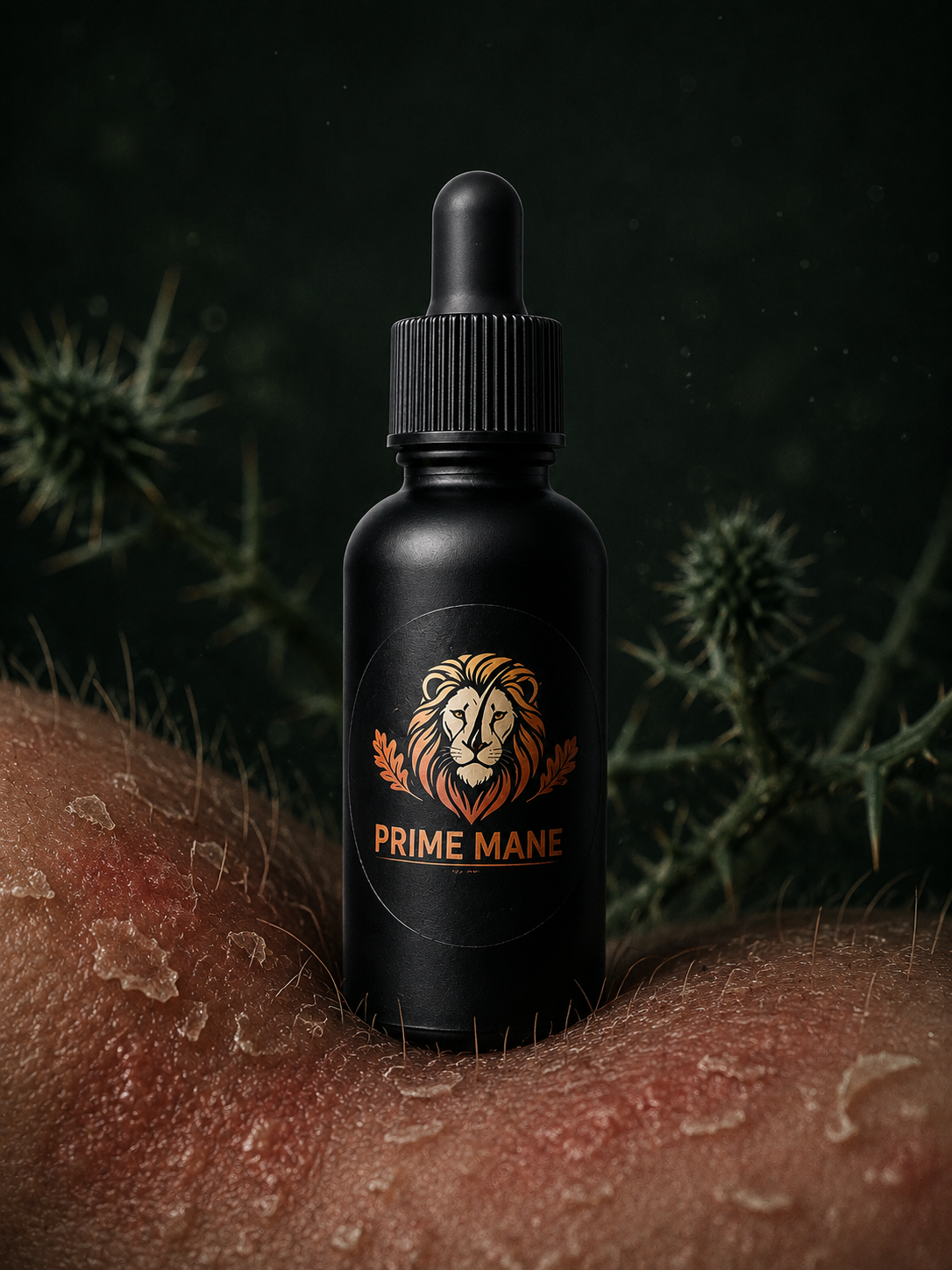
How Fall-to-Winter Weather Wrecks Your Beard (and What to Do About It) | Prime Mane
How Fall-to-Winter Weather Wrecks Your Beard (and What to Do About It) | Prime Mane
The shift from fall to winter is brutal on facial hair. Cold air strips moisture, indoor heating dries everything out, and the constant temperature swing between outside and inside creates a perfect storm for itch, breakage, and flaking.
Most men notice the damage after it's already done — rough texture, persistent itch under the beard, or a beard that suddenly feels brittle and looks dull. The problem isn't the beard itself. It's the environment, and your routine hasn't adjusted.
Here's what happens to your beard when the temperature drops, why it matters, and how to fix it before winter does real damage.
Cold Air Strips Natural Oils Fast
Winter air holds less moisture than warmer air. When relative humidity drops below 30%, which is common in cold climates, the moisture in your beard and the skin underneath evaporates faster than your body can replace it.
Facial hair is already drier than scalp hair because sebaceous glands produce less sebum as the follicle moves away from the scalp. When cold, dry air hits the beard, it pulls moisture out of the hair shaft, leaving it brittle and prone to breakage.
The skin underneath dries out even faster. Dead skin cells accumulate, causing the flaking commonly called beardruff. If you're already prone to dry skin, winter accelerates the problem.
You can't stop the weather, but you can counteract it. Lightweight, fast-absorbing carrier oils like jojoba and grapeseed penetrate the hair shaft and create a breathable barrier that slows moisture loss without sitting heavy or greasy.

Indoor Heating Makes It Worse

Step inside and the damage continues. Forced-air heating systems drop indoor humidity to desert levels, often below 20%. Your beard goes from cold and dry outside to hot and dry inside, with no recovery time.
The constant environmental swing stresses the hair cuticle. Repeated expansion and contraction weakens the hair structure, making it more susceptible to split ends and breakage. The skin underneath reacts with tightness, irritation, and sometimes redness.
Heavy, occlusive oils make this worse. They trap heat against the skin, block pores, and create a greasy buildup that looks conditioned from a distance but leaves the skin underneath tight and uncomfortable. That's why comedogenic ratings matter — oils with high pore-clogging potential (coconut at a reference rating of 4, palm, wheat germ) are the ones most often linked to breakouts and congestion during winter.
The fix is a formula built around non-comedogenic carriers. Jojoba (reference rating 0) is chemically close to human sebum, absorbs quickly, and leaves a breathable film. Argan, with about 45% oleic and 35% linoleic fatty acids plus vitamin E tocopherols, conditions without residue and is widely considered the gold standard for beard care.
Itch Gets Worse Because the Skin Can't Keep Up
Itch isn't just annoying — it's a signal that the skin underneath is failing to maintain its barrier function. When the environment pulls moisture out faster than your skin can produce oil, the protective lipid layer breaks down. Dead skin cells accumulate, irritation increases, and the constant low-grade inflammation creates that persistent itch.
Most men try to solve this by applying more product, but quantity doesn't fix the problem if the formula isn't right. Oils that sit on the surface without absorbing leave the skin underneath dry. Synthetic fragrance blends are repeatedly called out as the leading trigger for itch, redness, and irritation in beard oils, especially during winter when the skin is already compromised.
The solution is absorption and skin compatibility. Grapeseed oil, very light and high in linoleic acid at around 70%, absorbs fast and delivers moisture to the skin without greasy residue. Rosehip oil, rich in essential fatty acids, calms irritation and supports skin barrier repair. These aren't marketing terms — they're the oils formulated into products designed to address the skin underneath, not just the hair on top.
Breakage and Length Loss Spike in Winter
If you're trying to grow length, winter is when you lose ground. Dry, brittle hair snaps easily during combing, styling, or even just rubbing against a scarf or jacket collar. The damage compounds daily, and by the time you notice, you've lost weeks of growth.
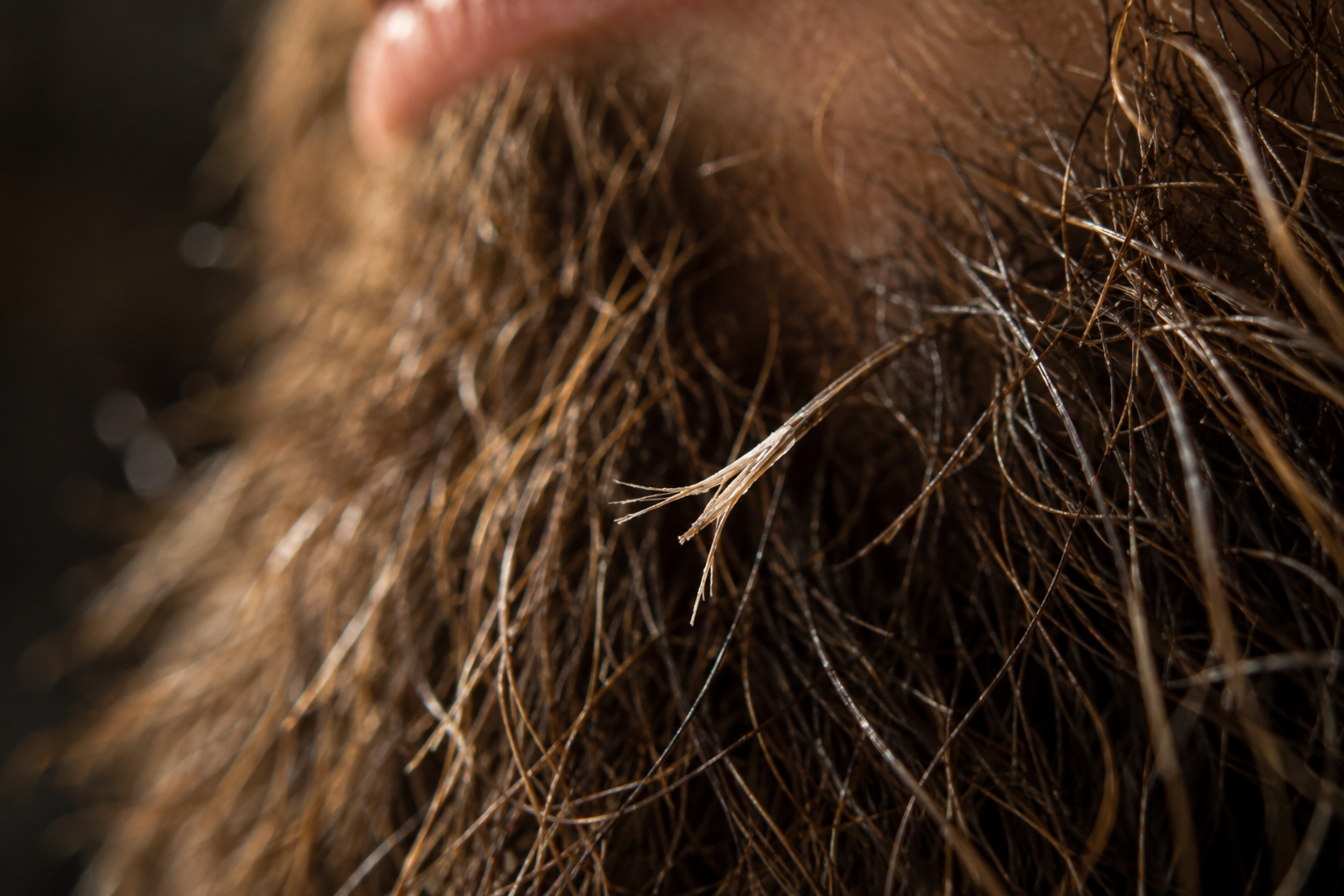
The hair cuticle, the outer protective layer, becomes rough and raised when moisture levels drop. This creates friction between strands and makes the hair more susceptible to mechanical damage. Split ends form faster, and if they're not addressed, they travel up the hair shaft and force you to trim more than you gained.
Deep-conditioning carriers are the fix. Wheat germ oil and hemp seed oil fortify the hair shaft and protect against environmental stress. Fractionated coconut oil, despite the name, is different from regular coconut oil — it's a refined, light carrier that absorbs without the comedogenic concerns of unrefined coconut. These oils are the foundation of formulas built for length retention, not just surface softness.
Coarse Hair Becomes Unmanageable
Coarse, wiry beards already have a rough cuticle structure. Winter makes it worse. The lack of moisture causes the hair to stiffen, lose flexibility, and resist styling. Combing becomes a fight, and the beard looks frizzy and unkempt no matter how much time you spend on it.
The problem is that coarse hair has larger diameter strands and more protein structure, which makes it harder for moisture to penetrate. Light oils work for fine or medium hair, but thick, wiry beards need heavier conditioning agents that can soften the cuticle and add slip.
Avocado oil and argan oil are the standard for coarse hair. Avocado is rich in monounsaturated fats and penetrates deeply to soften rigid strands. Argan adds shine and manageability without weight. Sweet almond oil provides slip, making combing easier and reducing breakage from mechanical stress.
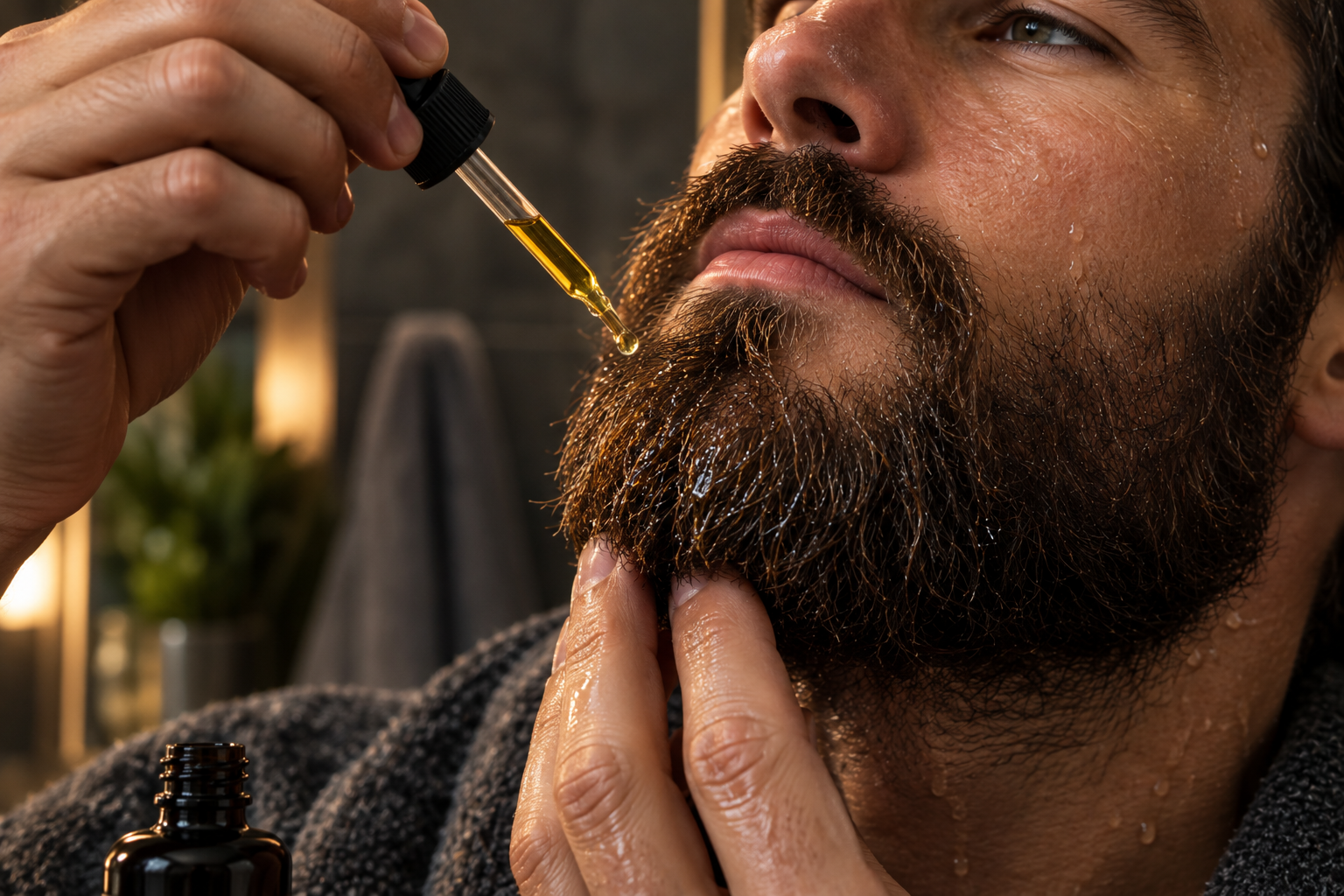
Application matters as much as formula. Apply 3-5 drops to a damp beard post-shower, when the hair cuticle is still open and absorption is maximized. This is the window when conditioning agents actually penetrate instead of sitting on the surface.
Adjust Your Routine When the Temperature Drops
Your summer routine doesn't work in winter. The environmental stress is different, the skin's needs change, and if you don't adjust, you'll spend the season fighting damage instead of maintaining progress.
First, switch to formulas built for the specific problem you're facing. Itch and flaking? A light, fast-absorbing blend with jojoba and rosehip targets the skin underneath. Stalled growth? Formulas with pumpkin seed, castor, and jojoba support circulation and follicle health. Breakage and length loss? Wheat germ and hemp seed oil fortify against environmental stress. Coarse, unmanageable texture? Avocado and argan soften and add slip.
Second, apply daily, on damp skin, right after washing. Consistent use over weeks delivers results. The category doesn't promise instant fixes — it delivers cumulative conditioning and protection when used correctly.
Third, avoid heavy, comedogenic oils and synthetic fragrance blends. Skin under a beard already traps more sweat, oil, and dead skin than exposed facial skin, so lightweight, low-pore-clogging formulas matter more during winter when the skin is already stressed.
Why Batch-Mixed-to-Order Matters in Winter
Oxidation is accelerated by environmental stress. Oils degrade faster when exposed to temperature fluctuations, light, and air. A product that's been sitting on a shelf for months has already lost some of its potency by the time it reaches you.
Prime Mane mixes each batch only after the customer's order is placed. This isn't a marketing angle — it's a quality control decision. Fresh formulations retain more of their natural fatty acids, vitamin E tocopherols, and oxidation stability. The oils you're applying are at peak effectiveness, not degraded by storage time.
Every batch follows Good Manufacturing Practices, and every ingredient is cross-referenced against Health Canada's Cosmetic Ingredient Hotlist to ensure compliance. This is the standard for premium formulations, not an exception.
Winter doesn't have to wreck your beard. The damage is predictable, the causes are understood, and the fixes are straightforward. Cold air strips moisture, indoor heating accelerates drying, and if your routine doesn't adjust, you'll lose ground.
Use lightweight, non-comedogenic carriers for daily conditioning. Match the formula to the problem — itch, growth stalls, breakage, or coarse texture. Apply consistently, on damp skin, after washing. Skip the heavy oils, synthetic fragrance, and products that sit on the surface instead of absorbing.
Stop fighting the season. Fix the routine.