
Why Your Beard Oil Breaks You Out (And How to Fix It) | Prime Mane Beard Oils Co.
Why Your Beard Oil Breaks You Out (And How to Fix It) | Prime Mane Beard Oils Co.
You apply beard oil to soften your beard and calm the skin underneath. Instead, you get breakouts, clogged pores, or that heavy greasy feeling that makes you want to stop using it entirely.
The problem is not beard oil itself. The problem is formulation. Most oils on the market are built around heavy, pore-clogging carriers that trap sweat, dirt, and bacteria against skin that already holds more heat and oil than exposed facial skin. Add synthetic fragrance or drying alcohols, and the irritation compounds.
This article breaks down exactly why breakouts happen, which ingredients cause them, and how to choose a formulation that works with your skin instead of against it.
The Real Reason Beard Oil Clogs Your Pores
Skin under a beard traps more sweat, oil, and dead skin than exposed facial areas. That environment already creates congestion risk. When you layer a heavy, poorly-absorbed oil on top, you seal that buildup in.
Comedogenic ratings measure how likely an ingredient is to block follicles and cause breakouts. Coconut oil scores a 4 out of 5. Palm oil and wheat germ oil also rate high. These are common beard oil carriers because they are cheap and shelf-stable, but they sit on the surface instead of absorbing, creating a film that traps bacteria and clogs pores.
The first two or three ingredients on a label make up 90 to 95 percent of the formula. If those are high-comedogenic oils, the rest of the ingredient list does not matter. You are applying a breakout trigger directly to congested skin.
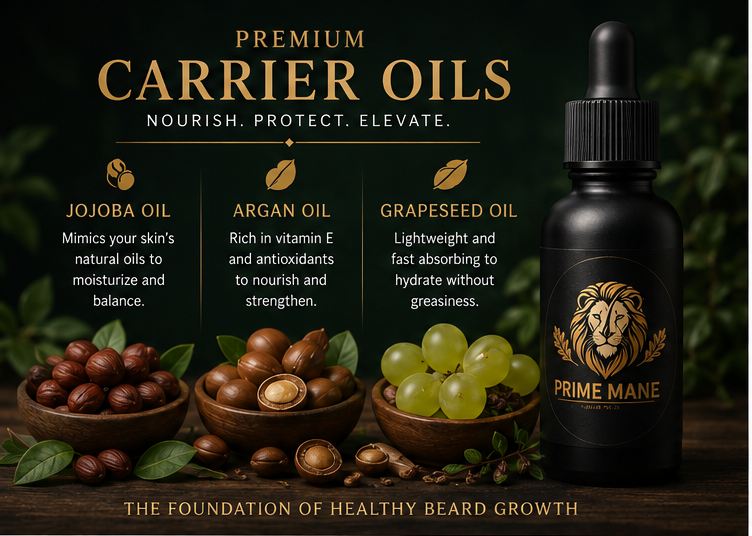
Jojoba oil, argan oil, and grapeseed oil absorb quickly and leave a breathable finish. Jojoba is technically a liquid wax that mimics human sebum. Argan is roughly 45 percent oleic acid and 35 percent linoleic acid, with natural vitamin E for oxidation stability. Grapeseed is very light and high in linoleic acid, around 70 percent. These carriers deliver conditioning without congestion.
Synthetic Fragrance and Irritation
Fragrance blends are the leading cause of itch, redness, and low-grade irritation in beard oils. Synthetic fragrance compounds are designed to smell strong and last long, but they often include sensitizers that accumulate over time and provoke reactions in skin already stressed by trapped heat and oil.
Essential oils at high concentrations can also irritate. Tea tree above roughly 1 percent or strong cinnamon bark will trigger sensitivity in many users. The goal is subtle scent from carefully dosed essential oils, not overpowering fragrance that sits on the skin all day.
If you have reactive skin or a history of irritation, start with fragrance-free or lightly-scented formulations. Itch and redness under a beard are signals that the formula is working against your skin, not with it.
Drying Alcohols and Over-Application
Some beard oils include drying alcohols to speed absorption or create a lighter feel. These alcohols strip moisture fast, leaving the beard rough and the skin flaking. What reads as quick-dry is actually dehydration.
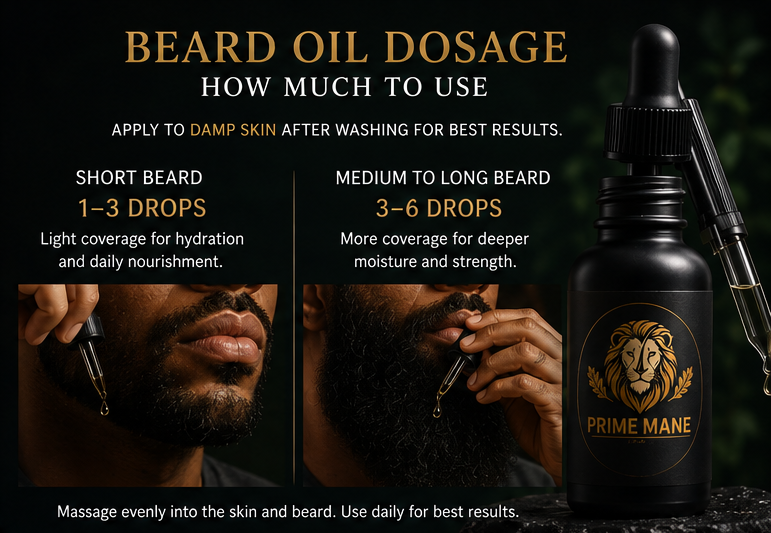
Over-application compounds the problem. Too much oil, especially from a heavy formula, creates greasy buildup and congestion. Guidance across the category is small amounts: a few drops for a short beard, slightly more for longer growth, applied to damp skin after washing.
More product does not mean better results. It means more surface residue, more trapped sweat, and more pore blockage. The right amount of a well-formulated oil absorbs fully and leaves no greasy film.
Cold-Pressed vs. Refined Oils
Cold-pressed oils retain more of their natural fatty acids and vitamin E than heavily refined or solvent-extracted oils. Refining removes minor components that contribute to skin-feel, absorption rate, and oxidation stability.
Refined oils are cheaper to produce and have longer shelf lives, but they sacrifice bioavailability. The fatty acid profile flattens out. The natural antioxidants that protect the oil from going rancid are stripped away, so synthetic preservatives get added back in.
Cold-pressed carriers deliver the full nutrient profile the plant naturally provides. The oil absorbs better, conditions more effectively, and requires no synthetic stabilizers. The tradeoff is shorter shelf life and higher cost, but the performance difference is measurable.
How to Choose a Formulation That Works
Read the first three ingredients. If you see coconut oil, palm oil, or wheat germ oil at the top, expect congestion. Look for jojoba, argan, grapeseed, hemp seed, avocado, or rosehip as primary carriers. These absorb quickly and leave a breathable finish.
Check for synthetic fragrance or alcohol denat high on the label. Both are common irritants. If the scent description uses words like 'bold' or 'long-lasting,' that usually signals synthetic fragrance. Essential oils should be listed individually and dosed conservatively.
Match the formulation to your beard stage and texture. Early growth and sensitive skin need lighter, fast-absorbing blends like jojoba and grapeseed. Longer beards and coarse textures benefit from deeper conditioning from avocado, argan, and sweet almond. Wiry hair needs slip and softening; dry skin underneath needs soothing without weight.
Consistent daily use matters more than heavy application. Apply a small amount to damp skin after washing, work it through to the ends, and let it absorb fully. Results in the category are described over weeks of consistent use, not instantly.
Prime Mane Formulations Built Around Low-Comedogenic Carriers
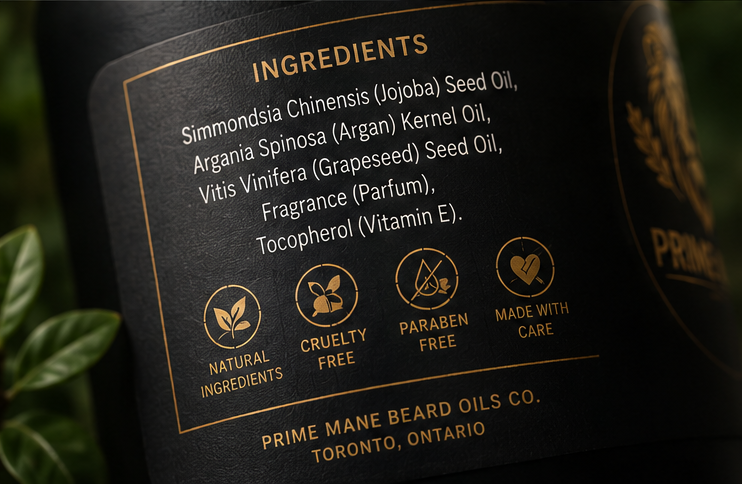
Every Prime Mane formulation is built around cold-pressed, low-comedogenic carriers chosen for absorption, nutrient density, and skin compatibility. No coconut oil. No palm oil. No synthetic fragrance. No drying alcohols.
Turbo Growth uses pumpkin seed, castor, and jojoba to support circulation and follicle health without congestion. Length & Retention combines wheat germ, hemp seed, and fractionated coconut oil to deep-condition and protect against breakage. Coarse Wave Tamer layers avocado, argan, and sweet almond for softening and slip. Itch & Skin Relief uses rosehip, grapeseed, and jojoba to calm irritation without sitting heavy.
Each blend is batch-to-order, GMP-compliant, and Health Canada compliant. The formulations are designed to absorb fully, condition effectively, and leave no greasy residue. The goal is skin comfort and beard manageability, not heavy coverage or overpowering scent.
Breakouts from beard oil are not inevitable. They are the result of poor formulation choices: heavy, pore-clogging carriers, synthetic fragrance, drying alcohols, and over-application.
The fix is straightforward. Choose cold-pressed, low-comedogenic oils. Match the formulation to your beard stage and skin sensitivity. Apply small amounts consistently, not heavy doses sporadically.
Prime Mane formulations are built around that standard. No fillers. No comedogenic triggers. Just nutrient-dense, science-grounded blends that absorb fully and work with your skin.